One of my favorite things about the cooler months is how just the sprinkle of nutmeg can amp up the flavor and nutrition of a dish or drink. This “warming” spice, frequently used in Ayurveda and traditional Chinese medicine, not only adds a sweet, woody note to our lattes and bakes, but also does a whole lot of good for our bodies—even in its miniscule doses. As a registered dietitian, I know this seed is largely underutilized.
In this article, I’ll explain what nutmeg is, how the seed can support our wellness goals, and also list simple ways to have this spice in our regular foods and drinks, like Live it Up Golden Hour, where a small amount of nutmeg is combined with turmeric, ashwagandha, ginger, and other spices in a delicious golden milk.
The potential health benefits of nutmeg are:
- May support restful sleep
- Aids with dental health
- May influence cognitive function
- May promote healthy skin
- Can help with digestion
- Has antioxidants
- Can support a positive mood
- May help with muscle soreness and joints
What Is Nutmeg?
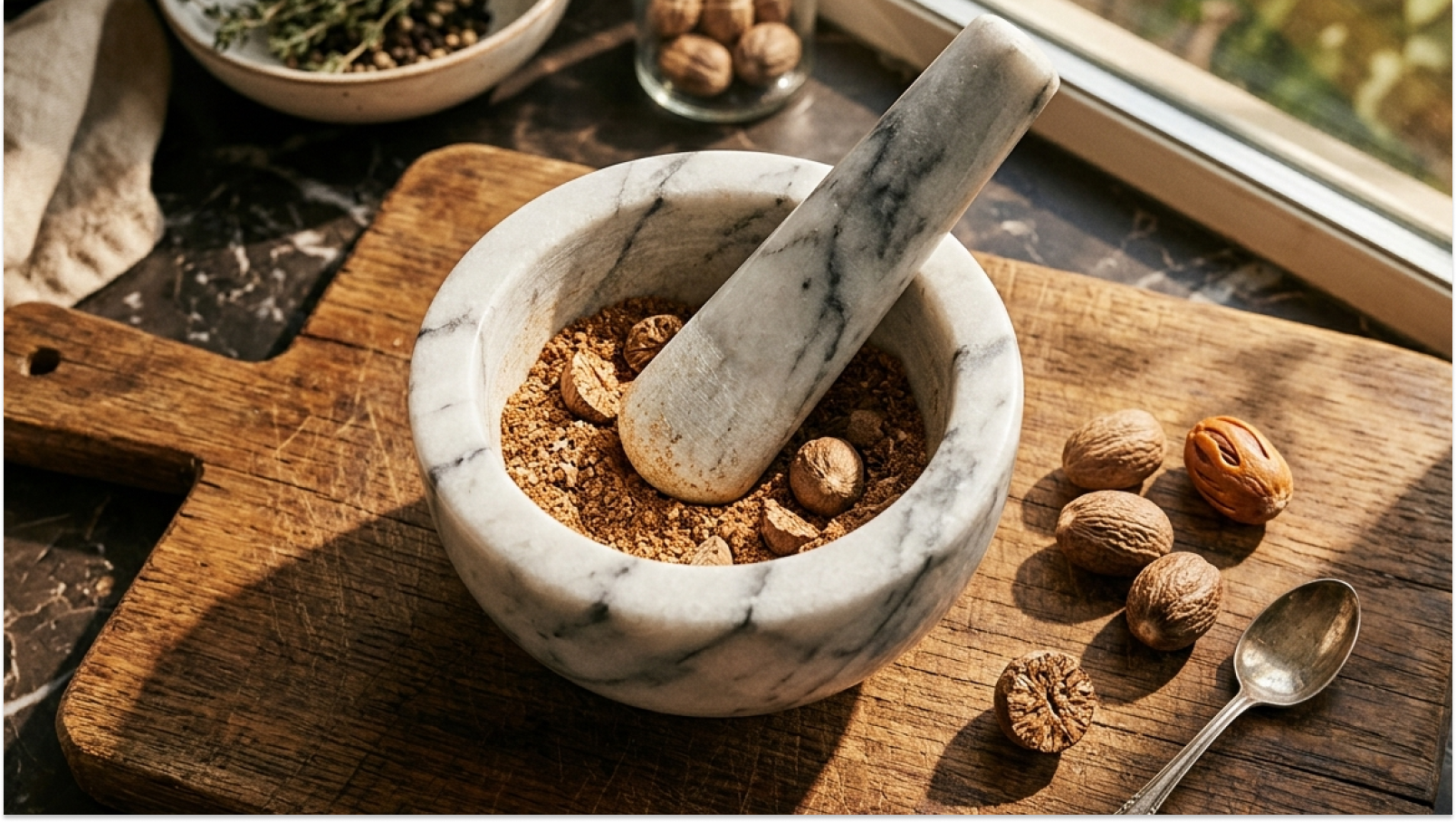
Nutmeg, unlike what its name suggests, isn’t a nut. It’s the seed of the Myristica fragrans tree. The nutmeg tree is native to Indonesia, but it also thrives in warm and humid areas like Grenada, Sri Lanka, India, and Malaysia. In the spice aisle of grocery stores, you can find nutmeg alongside spices like cinnamon, cardamom, and cloves. Nutmeg comes in two forms—as a whole, brown seed and ground powder.
Nutmegs have a good amount of saturated fat and offer dietary fiber, magnesium, phosphorus, potassium, calcium, plus vitamins B, C, and A. However, the seed’s true power stems from its plant compounds.
A single teaspoon (about 2.2g) of ground nutmeg provides the following:
- Calories: 12
- Carbohydrates: 1.08g
- Fats: 0.8 g
- Protein: 0.13g
- Dietary fiber: 0.46g


Did You Know?

The nutmeg tree grows small, bell-shaped pale-yellow flowers. These flowers are either male or female. It’s only the pollinated female flowers that produce the yellow nutmeg fruit that houses the seed.
Potential Benefits of Nutmeg from a Dietitian
Nutmeg is one of those ingredients that we often use as a flavoring agent, but this seed can do a lot more for our body.
1. May Support Restful Sleep
Myristicin and elemicin, two powerful compounds in nutmeg, are recognized for their ability to promote calmness in the body and muscles and support sound sleep. Nutmeg also promotes the release of serotonin, which is connected to sleep. In traditional Ayurveda practices, nutmeg often is mixed with milk to help one fall asleep. In a pilot study, individuals consuming 2g of nutmeg powder reported an increase in sleep hours.
2. Aids with Dental Health
Nutmeg’s essential oils, flavonoids, and phenolic fractions may help with oral health. In a double-blinded clinical trial, use of 1% nutmeg mouthwash was successful in impacting the oral microbiome. In another study, the consistent use of nutmeg mouthwash reflected an improvement in the gingival index scores. Furthermore, the macelignan in nutmeg had promising results against biofilm, which is tied to plaque build-up.
3. May Influence Cognitive Function
Nutmeg’s bioactive compounds, myristicin and macelignan, have been studied for their ties to cognition function. In a limited study, oral administration of nutmeg had positive effects on learning and memory in Wistar albino rats. Researchers attributed this to nutmeg’s ability to potentially slow the breakdown of acetylcholine, a transmitter that plays a role in learning. Nutmeg also contains magnesium, which is central to cognitive health.
4. May Promote Healthy Skin
Nutmeg's bioactive compounds like myristicin and elemicin and strong antioxidant profile make it boon for skin health. In a UV-irradiated human skin fibroblasts study, the macelignan in the seed was linked to production of type I procollagen. Finely ground nutmeg powder is often used in cosmetics as a natural exfoliant and may help remove dead skin cells and encourage cell turnover. The seed is a good source of vitamin C, which is associated with collagen production.
5. Aids Digestive Performance
While nutmeg has been a staple in traditional practices for digestive discomfort, modern, large scale studies are still limited. A 2022 study highlighted the seed’s impact on the strength of gut microbiome and number of probiotics, which contributes to gut health and performance. The spice is also recognized for its carminative properties, which may help motility or gas. Nutmeg’s fiber content may aid with digestive regularity and secretion of digestive enzymes.
Did You Know?
In traditional Chinese medicine, nutmeg is known as “Rou Dou Kou” and primarily used to “heat the digestive center” through its warm, aromatic properties.
6. Has Antioxidants
Nutmeg’s plant compounds, like caffeic, ferulic and protocatechuic acids, plus lignans and flavonoids are recognized for their antioxidant powers. These compounds can neutralize free radicals and contribute to managing oxidative stress. Additionally, the seed’s polyphenols and natural pigments (cyanidins) may help manage a healthy inflammatory response and support long-term cellular health.
7. Can Support a Positive Mood
Modern research has indicated how the seed’s phenolic compounds can modulate the FAAH enzyme linked to our body’s endocannabinoid or chemical signaling system, which influences stress and mood. The seed’s rich polyphenols, like caffeic and ferulic acid, alongside quercetin, demonstrate strong antioxidant capabilities in the brain. They may help manage oxidative stress, supporting a positive mood. However, these are preliminary studies and clinical trials are required to substantiate these purported benefits.
8. May Help with Muscle Soreness and Joints
Nutmeg oil has active compounds like eugenol, sabinene, and pinene that are well-known for their ability to help manage occasional muscle and joint discomfort. In a 2016 in vivo study, application of nutmeg oil had a positive effect on helping manage a healthy inflammatory response by reducing the COX-2 expression, the enzyme that triggers our body’s inflammatory pathways.
Possible Side Effects of Nutmeg
As nutmeg is generally used as a flavoring agent, we typically use just a sprinkle or dash of it. And in those small quantities, this seed is unlikely to cause any issues.
However, like with most things, too much is never a good thing, so you need to be extra careful with this aromatic spice. Nutmeg contains myristicin and elemicin which, in large amounts (2 teaspoons or approximately 5 grams of ground powder or 1-2 whole nutmegs), can lead to:
- Rapid heart rate
- Nausea and vomiting
- Hallucinations
- Disorientation
- Loss of muscle coordination
How to Use Nutmeg
Nutmeg has a nutty, slightly sweet flavor, with some peppery or clove-like undertones. It’s this balance that makes it the perfect addition to both savory and sweet preparations. And just a pinch or ¼ to ½ a teaspoon goes a long way.
My go-to ways of incorporating the whole nutmeg or the powder are:
- Sprinkling it into a warm drink, like a pumpkin-spiced latte, eggnog, or hot chocolate
- Seasoning vegetables like cauliflower and sweet potato
- Adding it to an apple or pumpkin pie filling
- Grating it into a South Asian curry or stew recipe
- Stirring it into rice pilaf
- Whisking it into a classic béchamel for pasta, mac ‘n’ cheese, and casseroles
- Using it as a marinade or rub for meats like chicken, lamb, duck, and pork
- Enjoying it as a relaxing drink from a premix like Live it Up Golden Hour
Did You Know?
The whole nutmeg seed has a distinctive smell that holds for at least 3-5 years when stored properly in an airtight jar, away from the heat and sunlight. Ground nutmeg powder loses its fragrance much faster as the oils trapped in the seed evaporate.
Consider Trying Live it Up Golden Hour

Nutmeg mostly gets used around the winter months, but this spice deserves to be a routine part of our daily foods and drinks. I understand that not everyone knows how to incorporate it, and that’s why I recommend my clients reap the potential benefits of a small amount of nutmeg by having Live it Up Golden Hour.
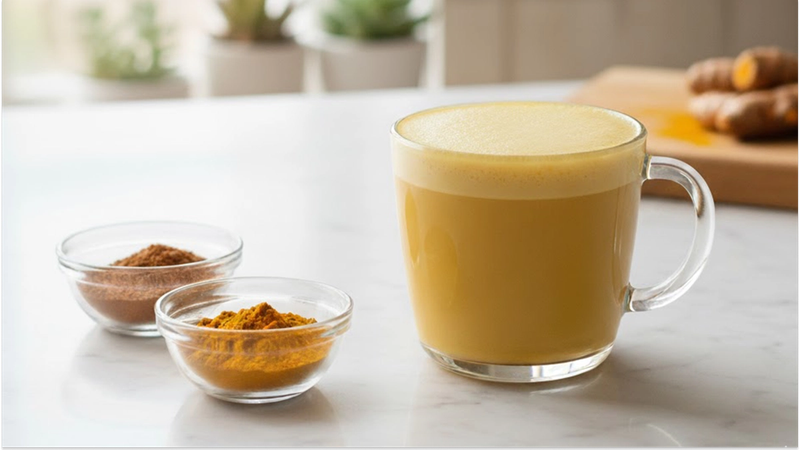
Golden Hour is a delicious, creamy blend of turmeric, clinically dosed ashwagandha, pepper, nutmeg and 11 other superfoods. The blend uses natural ingredients and contains no soy, nuts, or dairy. The mix is ideal to support a healthy stress response, relaxation, and occasional inflammation.
I personally like to have this mix an hour or two before bedtime as it helps me manage my emotional well-being, which in-turn, helps me relax after a long day.
It’s easy to try Live it Up Golden Hour too. All orders get free shipping and a money-back guarantee so you can be sure the all-natural premix is your ideal bedtime companion.
FAQs on Nutmeg
How is mace different from nutmeg?
Mace and nutmeg have distinct colors and flavor profiles. Mace is the lacy red covering that wraps the nutmeg seed. The mace usually dries to a yellow-orange color and has a sharper taste than the nutmeg.
How should I store whole and ground nutmeg?
It’s best to store whole and ground nutmeg in an airtight jar or pouch. Place those jars in a cool, dry place away from heat and harsh sunlight. This will help the seed and powder stay fragrant and flavorful for longer.
How much nutmeg is safe daily?
Nutmeg is potent in its aroma, flavor, and dosage, so you really need only a small amount to benefit from this seed. The recommended daily use is around a pinch (¼ to ½ a teaspoon) of grounded powder in curries or stews. The upper consumption limit is 5g, which is around 1-2 teaspoons.
Is nutmeg hot or cold for the body?
As per Ayurveda practices, nutmeg is a “warming” spice and supports functions like digestion, stress response, and energy.
This article is for informational purposes only and is not medical advice or individualized nutrition counseling. Please consult a qualified healthcare provider before making changes to supplements or medications. Any product or brand mentions are for general information and don’t guarantee results.
- https://www.healthline.com/nutrition/nutmeg-benefits
- https://www.webmd.com/diet/nutmeg-health-benefits-nutrition-uses
- https://www.webmd.com/vitamins/ai/ingredientmono-788/nutmeg
- https://pubmed.ncbi.nlm.nih.gov/40790655/
- https://www.urmc.rochester.edu/encyclopedia/content?contenttypeid=76&contentid=02025-2
- https://www.sciencedirect.com/science/article/pii/S2468227623000078
- https://www.thespicehouse.com/blogs/news/what-is-nutmeg
- https://pmc.ncbi.nlm.nih.gov/articles/PMC5222521/
- https://www.cabidigitallibrary.org/doi/pdf/10.5555/20133249076
- https://www.researchgate.net/publication/326444717_MANAGING_INSOMNIA_WITH_JATHIPHALA_MYRISTICA_FRAGRANS_POWDER_-_A_PILOT_STUDY
- https://www.researchgate.net/publication/363912399_Effect_of_Nutmeg_Myristica_Fragrans_Methanolic_Extract_to_the_Growth_of_Dental_Plaque_Bacteria
- https://www.researchgate.net/publication/367156886_Effectiveness_of_Myristica_fragrans_mouth_rinse_in_Children_A_clinical_trial
- https://journalijcar.org/issues/comparative-evaluation-antibacterial-efficacy-myristica-fragrans-1-novel-mouth-wash
- https://www.researchgate.net/publication/5919434_In_vitro_anti-biofilm_activity_of_Macelignan_isolated_from_Myristica_fragrans_Houtt_against_oral_primary_colonizer_bacteria
- https://www.researchgate.net/publication/274269407_ORAL_ADMINISTRATION_OF_NUTMEG_ON_MEMORY_BOOSTING_AND_REGAINING_IN_WISTAR_ALBINO_RATS
- https://www.kamaayurveda.in/blog/nutmeg-for-skin?srsltid=AfmBOorqe9ft3b-7TBzNcU6W3OTH9W8o-Ru2KTT9eXEU-7P0yzx1vg2V
- https://eprajournals.com/pdf/fm/jpanel/upload/2025/January/202501-01-019771
- https://www.healthline.com/health/high-on-nutmeg
- https://pmc.ncbi.nlm.nih.gov/articles/PMC11059288/
- https://pmc.ncbi.nlm.nih.gov/articles/PMC11366707/
- https://my.clevelandclinic.org/health/articles/24568-acetylcholine-ach
- https://pubmed.ncbi.nlm.nih.gov/18505499/
- https://pmc.ncbi.nlm.nih.gov/articles/PMC6920849/