Can I drink electrolyte water every day? It's one of the questions I hear most as a dietitian, and the short answer is yes! For most healthy adults, drinking electrolyte water daily is safe. Whether it's useful is the better question, and that depends on your day.
Electrolyte water is simply water with minerals added, whether from a bottle or from stirring a powder like Live it Up Vital Minerals into a glass. Your body doesn't care about the delivery method. It cares what's in the mix, how much sodium and potassium you're adding, and whether your routine gives you a reason to add it.
Can I Drink Electrolyte Powder Every Day? The Verdict
If you're a healthy adult with normal kidney function, you can drink a moderate electrolyte powder every day. Your kidneys are built for exactly this job. They hold blood levels in a tight range and send what you don't need out in your urine.
Now the caveat the skeptics lead with (and they're not wrong) is that food and plain water already cover baseline electrolyte needs for most people. Nobody needs a powder to survive a desk day. So my honest answer is that daily use is safe, and for a meaningful group of people, like those in endurance sports, or even living in hot and humid conditions, it can be genuinely helpful. The rest of this article is about which group you're in.


Did You Know?

Your kidneys filter excess electrolytes out of your body and into your urine. But doubling your scoops doesn't necessarily double your hydration.
When Daily Electrolytes Actually Help
Do you need electrolytes? Here are common scenarios where the answer may be yes:
- Workouts past the hour mark. For shorter, moderate exercise, plain water is the best choice. Past an hour, especially at high intensity events like Hyrox or a marathon, replacing sodium earns its place.
- Heat and humidity. Sweat is salty. Long stretches outside, including a physically demanding work day, drain sodium along with fluid.
- Salty sweaters. White streaks on dried shirts mean above-average sodium losses.
- Recovery days. A rough stretch can pull fluid and electrolytes out together, and it becomes necessary to replace both.
- Low-appetite days. Most electrolytes arrive through food. If you eat less, the gap a powder fills grows.
- You drink more when water tastes like something. If flavor moves you from a single morning glass to steady sipping, that's a real hydration outcome.
When to Skip It (or Ask a Doctor First)
Some bodies can't shrug off extra minerals. Certain medications and scenarios, like having sodium sensitivities or kidney function concerns, can make electrolyte balance harder to hold. It’s always better to talk to your primary physician before starting any supplement, even an electrolyte powder. If any of that describes you or you're pregnant, bring the label to your provider first.
I generally recommend all my clients watch the sodium math, because when it comes to electrolytes, we want a balance, not necessarily more. About 87% of American adults already exceed the 2,300 mg sodium level set by the National Academies, and a daily hydration powder sits on top of everything food contributes. Persistently overdoing it can show up as dizziness, nausea, headaches, fatigue, and muscle weakness.
How Many Electrolyte Drinks Per Day Is Reasonable?
There's no official quota for electrolyte drinks, as each powder or drink has its own ratios. To make it simpler to track, anchor to the mineral targets. The National Academies set the sodium Adequate Intake (what your body needs to function) at 1,500 mg a day for ages 14 to 50 and 2,300 mg as the level to stay under. Potassium goes the other direction: the AI is 3,400 mg for men and 2,600 mg for women, and most Americans fall short.
I tend to follow the manufacturer's serving guidance, then subtract for my life’s demands. One serving of a moderate powder fits inside most days. On low-activity days with normal meals, I usually need less than the package allows.
Dietitian Tip
For tracking sodium intake, count your powder's sodium inside your day's total. For instance, if your target is 1500 mg, and your powder has 300 mg of sodium in each serving, you’re left with 1200 mg for the day. Also, be mindful that other supplements like greens or protein powders may add to your sodium intake, and you need to account for those just as you would for food.
What to Look for in a Daily Electrolyte Powder
People ask me what the best electrolyte drink is, and the honest answer is the one built for how you actually live. For daily use, I check:
- Sodium concentration: Most daily formulas carry notably less sodium than athletic mixes, like LMNT or Liquid I.V., that are built for heavy sweat sessions
- Inclusion of potassium and other essential minerals: Our body needs potassium right alongside sodium to hydrate. Therefore, I seek a daily formula that includes this essential mineral. I also scout for supporting minerals like magnesium and calcium.
- No added sugar: Classic sports drinks bundle electrolytes with sugar meant to fuel long endurance exercise. While the science of pairing carbs with electrolytes is useful mid-marathon, it may not be necessary for a day at a desk.
- Third-party testing: A safeguard for quality and label accuracy is to look for third-party testing seals like NSF Certified for Sport or Informed Choice.
- A taste you'll repeat: The best formula on paper won’t do much benefit if the taste hinders you from using it consistently.
Try Daily Electrolytes with Live it Up Vital Minerals
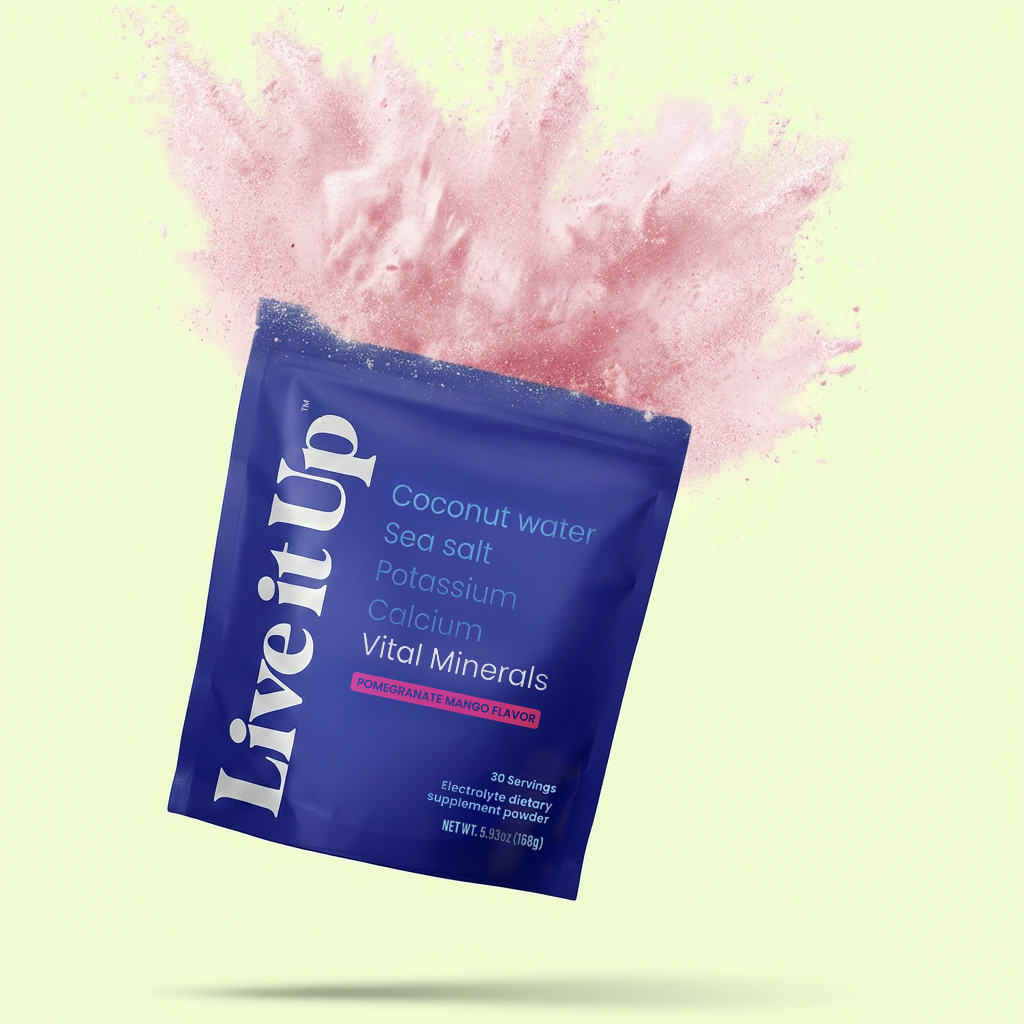
Electrolytes are great for athletic performance, but they matter on other days too, as they can support other vital body functions like nutrient absorption, maintaining pH balance, and energy production. For the reasons listed and everyday hydration, I turn to Live it Up Vital Minerals.
Here’s why I prefer Vital Minerals over other electrolyte powders.
- Each scoop delivers meaningful doses of 510 mg of sodium and 300 mg of potassium, helping you feel fresh and vitalized on a daily basis. Uses coconut water powder and sea salt as a base instead of a synthetic carrier.
- Includes supporting minerals like calcium and vitamin C that may help with bone health and immune response.
- Comes in five natural, fruity flavors—Lemon Lime, Watermelon, Pomegranate Mango, Strawberry Lemonade, and Pineapple Coconut—that have no artificial sweeteners, dyes, or flavoring agents.
- Affordable with a price under $1 per serving and free shipping.
Vital Minerals is easy to take, just mix 1 scoop into 12–16 ounces of water and shake or stir it. The label allows up to 2 servings a day, but most people do well with just one.
Frequently Asked Questions
Is it safe to drink electrolyte water every day?
For most healthy adults with normal kidney function, yes, a moderate, low-sugar formula is safe as a daily habit. If you’re concerned if an electrolyte supplement is right for you, check with your healthcare provider or a registered dietitian first.
What happens if you drink too many electrolytes?
Your kidneys flush modest excess sodium into your urine. But consistently going overboard is different and can show up as nausea, fatigue, headache, or muscle weakness. It’s best to follow label directions to understand how much sodium a drink adds to your daily intake.
Do electrolyte drinks count toward my daily water intake?
Yes, electrolyte water is still water, and it counts fully toward your daily fluid needs, the same way other beverages do. The minerals don't cancel the hydration, and when you're sweating heavily, the sodium actually helps you retain the fluid you drink instead of losing it.
How much electrolytes is too much?
There's no single cutoff, and remember that everyone has unique needs based on their body and lifestyle. As a dietitian, I recommend using the National Academies flag 2,300 mg a day guideline as your upper limit for sodium. Most American adults already exceed it through food alone. If a supplement routine pushes you well past that, that's too much.
Are electrolytes good for you?
Electrolytes are essential, and muscle contractions and fluid balance all run on them. The real question is whether you need supplemental electrolytes, and that comes down to your day, what food you eat, what activities you partake in, and whether you live in humid and hot conditions.
This article is for informational purposes only and is not medical advice or individualized nutrition counseling. Please consult a qualified healthcare provider before making changes to supplements or medications. Any product or brand mentions are for general information and don’t guarantee results.
- https://www.nationalacademies.org/read/25353/chapter/4
- https://www.ncbi.nlm.nih.gov/pmc/articles/PMC9361836/
- https://www.ncbi.nlm.nih.gov/books/NBK587683/
- https://nutritionsource.hsph.harvard.edu/electrolyte-drinks/
- https://nutritionsource.hsph.harvard.edu/sports-drinks/
- https://www.health.harvard.edu/diet-and-nutrition/gatorade-liquid-iv-do-you-need-extra-electrolytes
- https://my.clevelandclinic.org/health/diagnostics/21790-electrolytes
- https://my.clevelandclinic.org/health/symptoms/24019-electrolyte-imbalance