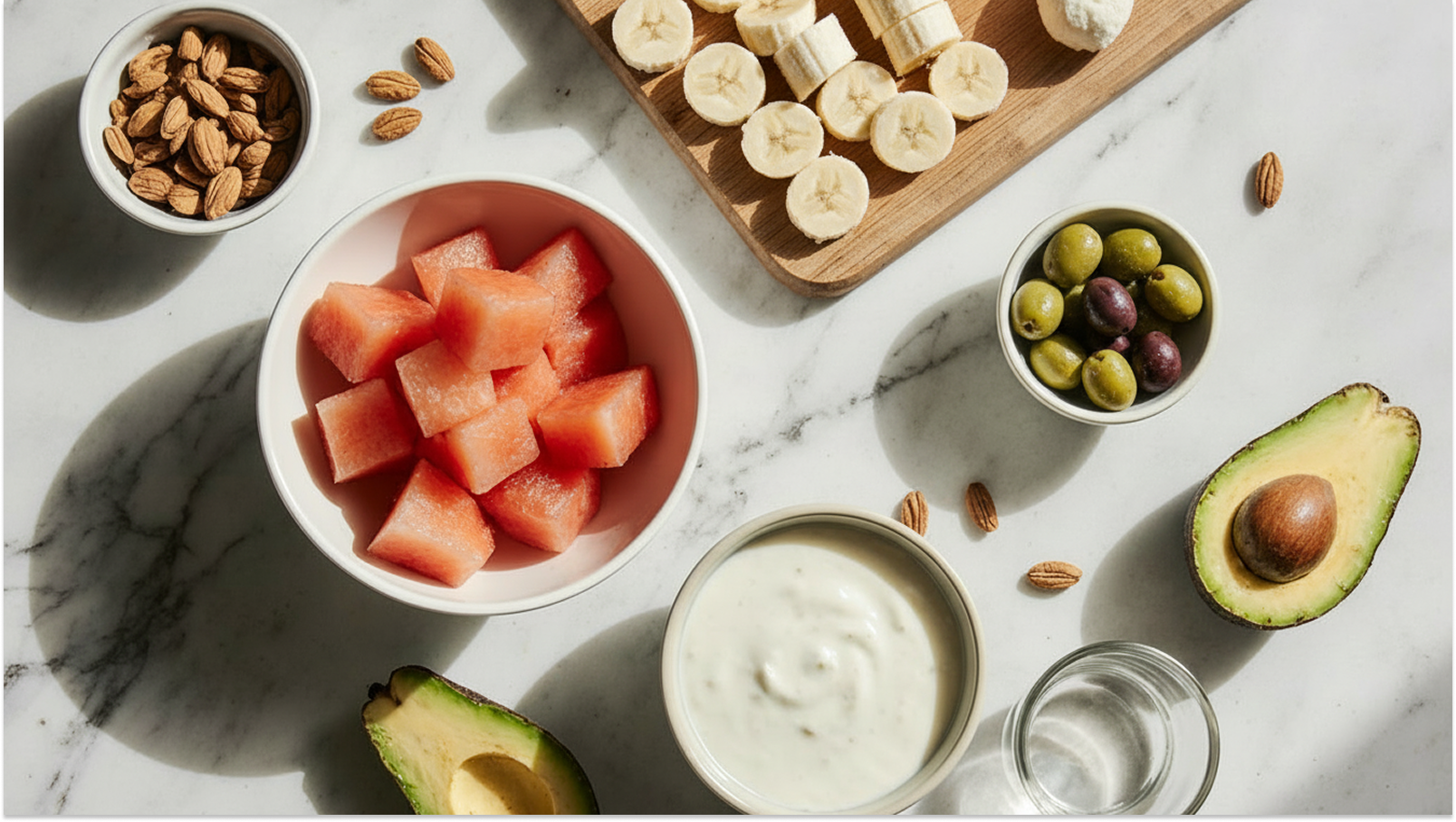
As a registered dietitian, there is one thing that almost all of my clients overlook: the importance of proper hydration, which can impact every area of your health. While electrolyte beverages have risen in popularity (and for good reason!), many foods offer natural electrolyte sources. In this article, I’ll walk you through a number of electrolyte-rich foods for you to incorporate into your diet.
The 20 best foods with electrolytes at a glance:
- Olives
- Pickles
- Hard cheeses
- Miso paste
- Bananas
- Cucumber
- Watermelon
- Spinach
- Apricots
- Sunflower seeds
- Cauliflower
- Chickpeas
- Salmon
- Chicken
- Greek yogurt
- Milk
- Almonds
- Whole grains
- Avocado
- Dark chocolate
If regularly getting some of these foods on your plate is hard, I recommend seeking out a balanced electrolyte drink like Live it Up Vital Minerals. This hydration drink supplies your body with plenty of sodium, potassium, and other essential nutrients to complement your regular diet and support your overall wellness. If you’re curious about Vital Minerals, read on—I’ll also dive into why I love this drink mix below!
What Are Electrolytes?
Electrolytes are minerals that carry a positive and negative electrical charge. Thanks to this electrical charge, electrolytes are responsible for keeping our bodies hydrated. The benefits of electrolytes extend beyond simple functioning, and you may notice changes in your skin, digestion, focus, and energy levels as a result of cellular hydration.
There are essential electrolytes that your body needs for optimal functioning and hydration: Sodium, potassium, phosphorus, chloride, calcium, and magnesium. Fortunately, at least one of these electrolytes can be found in the foods you eat every day, allowing you to replenish electrolytes naturally.
20 Best Foods with Electrolytes
You don’t necessarily need a fancy hydration drink or electrolyte infused waters to get enough electrolytes. The foods below are electrolyte-rich and filled with plenty of other vitamins and minerals to support your fluid and electrolyte balance.
Foods High in Sodium
Before we dive in, I want to note that most Americans don’t need to focus on boosting their sodium intake; in fact, most Americans consume well over the recommended intake of 1,500 to 2,300mg simply by relying on highly processed foods. However, if you regularly avoid highly processed food items, then seeking out foods naturally high in sodium is a great way to support your electrolyte levels.
- Olives: With 735mg of sodium in 100g, olives provide essential electrolytes needed for hydration. Also high in healthy fats, much like olive oil, olives may help with cell development and maintenance.
- Pickles: A single dill pickle has 809mg of sodium, which is nearly half of the recommended daily sodium intake! So, be careful not to overdo it on the pickles (in other words, keep it to one to two per daily) and be mindful of how many other salty foods you consume throughout the day.
- Hard cheeses: If a cheese board is your favorite snack, then dive into those hard cheeses (sharp cheddar or manchego, for example) for sodium. Just 1oz of cheddar cheese has 176mg of sodium, with manchego providing a comparable 170mg.
- Miso paste: This traditional Japanese condiment is derived from fermented soybeans. Since one tablespoon of miso paste packs 634mg of sodium, it’s important to start small when using miso paste when cooking; consider making miso soup at home, using miso paste in sauces, or in baked goods.
Foods High in Potassium
- Bananas: Rich in potassium and other essential nutrients, bananas are a great way to supplement your body’s electrolytes. Containing 422mg, this popular fruit and nutrient-rich food is an easy on-the-go snack on its own but also makes for a great smoothie ingredient.
- Cucumber: One peeled cucumber offers 5 of the 6 essential electrolytes, particularly potassium at 380.8mg. This low-calorie, water-dense food is great for hydration and is delicious eaten alone, with hummus or your dip of choice, or in salads.
- Watermelon: This delicious summer fruit is 92% water and packed with 172mg of potassium, plus vitamin C, which plays an important role in energy metabolism and heat tolerance. Eat watermelon sliced by itself or chop into chunks and toss with basil and feta for a watermelon salad.
- Spinach: This nutritional powerhouse packs 167mg of potassium in a single cup alongside other essential vitamins and minerals. Also low in calories, spinach is a great addition to salads, smoothies, stir fries, or in a green juice. Consider trying other leafy green vegetables as well to support your electrolyte levels.
- Apricots: This delicious stone fruit serves up 90mg of potassium! Though only in season during the warm summer months, dried apricots are equally nutritious and potassium-rich; simply add dried apricots to trail mix, granola, baked goods, or salads.


Dietitian Tip

If you're struggling to fill your meals with veggies, consider trying a greens powder to ensure you're getting more of the essential nutrients your body needs. Greens powders often contain foods high in electrolytes, making it a great way to support your well-being.
Foods High in Phosphorus
- Sunflower seeds: Unsalted sunflower seeds offer plenty of phosphorus, potassium, and magnesium, the latter of which is important for hydration, muscle function, and immunity. If you prefer snacking on salted seeds, I recommend opting for a bag labeled as lightly salted to ensure you don’t overdo your sodium intake. Other nuts and seeds are also high in electrolytes, so consider other options if sunflower seeds aren't your preference.
- Cauliflower: With 44mg of phosphorus in one cup of raw cauliflower, this humble veggie is a delicious way to support your body’s overall function. Try it roasted alongside your other favorite veggies, blended into soups, eaten on a raw veggie platter with hummus, or riced.
- Chickpeas: One cup of chickpeas offers 275mg of phosphorus, making it one of the best ways to get this essential electrolyte. Also containing 14.5g of vegan protein, chickpeas (also known as garbanzo beans) are delicious when ground into hummus, added to soups, or made into veggie burgers.
- Salmon: This fish is one of the best sources of phosphorus, with one fillet containing 396mg. Also packed with 970mg of potassium and 57mg of magnesium, salmon is a surprising yet effective way to ensure you get plenty of electrolytes in addition to protein, healthy fats, and other nutrients.
- Chicken: If you’re a meat eater, chicken’s health benefits go beyond protein—consider the 191mg of phosphorus found in a 5oz serving. Chicken is also a great source of potassium and sodium, making it a well-rounded source of electrolytes.
Foods High in Calcium
- Greek yogurt: One cup of nonfat Greek yogurt offers 272mg of calcium plus phosphorus, potassium, and sodium. Simply eat with granola in a berry parfait, incorporate into baking, add to smoothies, or frozen into popsicles.
- Milk: Most kids drink milk at some point in their lives, and for good reason. One cup of whole milk offers 275.72mg of calcium plus 222mg of phosphorus, 97mg of sodium, and 348mg of potassium.
- Almonds: This protein-rich nut provides 354.64mg of calcium per cup along with plenty of magnesium, phosphorus, and protein. Use this electrolyte-rich nut in homemade granola, chopped and added to salads, as almond butter, or ground into flour for baking.
Foods High in Magnesium
- Whole grains: 100g of whole wheat flour contains 117mg of magnesium, which is significantly higher than the 22mg found in white flour. Boost your magnesium intake by opting for whole wheat sandwich bread, whole wheat pasta, or cooking with farro, bulger, or other whole grains.
- Avocado: A single avocado provinces 14% of your daily magnesium intake, or 58mg. This versatile fruit is easy to incorporate into your diet—try mashing some on toasted bread, dicing and adding to salads, blending into smoothies, or incorporating into dips.
- Dark chocolate: This tasty treat is a surprising source of antioxidants and magnesium. A single square (1oz) packs 64mg of magnesium, making it a great way to enhance your intake of this essential mineral.
Tips for a Hydrating Diet
When it comes to staying hydrated regularly, it’s best to start by focusing on the basics. As an RD, here’s how I recommend maintaining a hydrating diet every day:
- Drink plenty of fluids throughout the day, aiming for 11.5 cups daily for women and 15.5 cups daily for men.
- Eat your electrolytes! A balanced diet includes a variety of whole foods like veggies, fruits, legumes, whole grains, and other minimally-processed foods. Incorporating these foods into your daily meals is a great way to naturally support your electrolyte levels.
- Avoid highly processed foods. Although sodium is essential for hydration, the highly processed foods that are common in the American diet can result in consuming too much sodium, which can lead to dehydration and other health complications.
- Look for foods that balance electrolytes like sodium, potassium, magnesium, calcium, and other minerals and vitamins.
- Consider trying Live it Up Vital Minerals if you need extra hydration support. Electrolyte powders are a convenient and easy way to ensure you're getting an adequate intake of essential electrolytes when you need it.
Dietitian Tip
You don’t need to eat every possible hydrating food on this list, especially if getting fruits and veggies in every meal is hard to begin with. Start by trying a handful, and don’t give up until you find a few you love; keep your favorites in your fridge to ensure you get some hydrating foods throughout the week!
Boost Your Electrolytes with Live it Up Vital Minerals
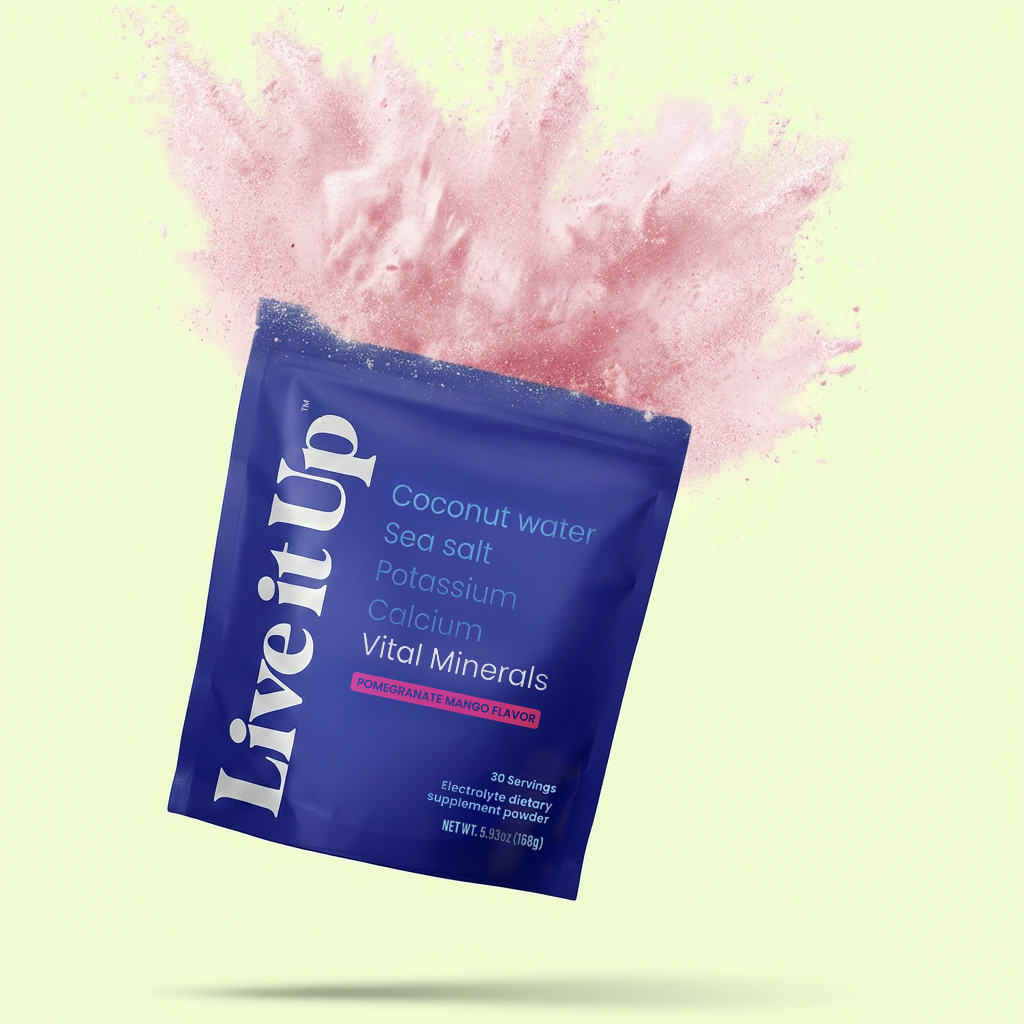
When it comes to diet and hydration, sometimes it can feel like there’s no time in the day to make a nutritious meal filled with hydrating foods. That’s okay because we’re all human! I love Vital Minerals from Live it Up for this exact reason—this electrolyte drink mix provides my body with the hydrating minerals it needs when I just don’t have the time to get the replenishment I need from the fridge.
Made with a balanced ratio of sodium to potassium from coconut water powder and sea salt, the electrolyte content of Vital Minerals is designed to accompany the modern American diet. Unlike other hydration beverages, this one provides enough to hydrate your body on a cellular level without being a salt bomb.
Perhaps my favorite part of Live it Up Vital Minerals is that it’s affordable, dissolves well, and tastes amazing. At $0.99 per serving with a subscription, alongside free shipping, this electrolyte powder makes hydration accessible to nearly all price points. Curious about taking your hydration to the next level? Consider giving Live it Up Vital Minerals a try!
FAQs About Electrolyte-Rich Foods
Below are answers to some commonly asked questions about foods with electrolytes.
What foods have the most electrolytes?
Many common fruits, veggies, and whole grains naturally contain water and essential minerals to boost your electrolyte intake. As part of a healthy diet, seek out foods like olives, pickles, cheese, and miso paste for salt intake. Other electrolyte-rich foods include bananas, leafy green vegetables, dairy, and sunflower seeds.
What is the best drink to replace electrolytes?
While everyone’s needs are different, I recommend Live it Up Vital Minerals as the best electrolyte powder since its ratio of sodium to potassium helps fluid balance and is designed to complement the modern diet. In addition to essential minerals like sodium, potassium, and calcium, Vital Minerals stands out from many electrolyte beverages with 68mg (76% daily value) of vitamin C, which may support heat tolerance and recovery, allowing the body to rehydrate faster than with just water. It also lacks the added sugar of many sports drinks.
Can you have too many electrolytes?
Just like it’s possible to have electrolyte imbalance, it’s possible to have too much, especially when it comes to sodium. Although sodium is needed for cellular hydration, too much sodium may actually increase dehydration and is linked to a range of other health concerns. Consuming too much potassium, calcium, or magnesium can also lead to a range of side effects like confusion, digestive upset and nausea, or muscle cramps, among other issues. It’s always best to make sure your diet and supplement routine fall within recommended daily values of vitamins and minerals, and get to know what your hydration needs are.
How can I replenish electrolytes quickly?
To quickly replenish your body’s electrolytes faster than water, try having an electrolyte drink on hand. Live it Up Vital Minerals was designed for quick absorption thanks to its balanced blend of electrolytes (with no added sugar). In addition, snack on electrolyte-rich foods to replenish your body like cucumber sticks. These are great tips to keep in mind whenever you wrap up intense workouts, find yourself in hot climates, or are recovering from an illness.
What are the signs of electrolyte deficiency?
Signs of needing more electrolytes include muscle cramps, weakness, dizziness, headaches, nausea, and/or diarrhea. Depending on your personal health and the severity of your symptoms, consult a healthcare provider about checking your levels and the right next steps for you.
This article is for informational purposes only and is not medical advice or individualized nutrition counseling. Please consult a qualified healthcare provider before making changes to supplements or medications. Any product or brand mentions are for general information and don’t guarantee results.
- https://fdc.nal.usda.gov/food-details/169094/nutrients
- https://www.heart.org/en/healthy-living/healthy-eating/eat-smart/fats/monounsaturated-fats
- https://health.clevelandclinic.org/are-pickles-good-for-you
- https://www.heart.org/en/healthy-living/healthy-eating/eat-smart/sodium/how-much-sodium-should-i-eat-per-day
- https://www.urmc.rochester.edu/encyclopedia/content?contenttypeid=76&contentid=01009-4
- https://www.qfc.com/p/murray-s-aged-manchego-cheese/0029647870000
- https://www.urmc.rochester.edu/encyclopedia/content
- https://franklin.ces.ncsu.edu/2024/07/watermelon-nutrition-facts-and-benefits/
- https://www.ncbi.nlm.nih.gov/books/NBK236216/
- https://letsliveitup.com/blogs/supergreens/spinach-benefits
- https://www.webmd.com/diet/health-benefits-apricots
- https://medlineplus.gov/ency/article/002423.htm
- https://letsliveitup.com/blogs/supergreens/best-super-greens-powders
- https://www.urmc.rochester.edu/encyclopedia/content
- https://www.urmc.rochester.edu/encyclopedia/content?contenttypeid=76&contentid=11135-1
- https://www.urmc.rochester.edu/encyclopedia/content?contenttypeid=76&contentid=16057-1
- https://www.urmc.rochester.edu/encyclopedia/content?contenttypeid=76&contentid=15076-1
- https://www.urmc.rochester.edu/encyclopedia/content?contenttypeid=76&contentid=05311-2
- https://fdc.nal.usda.gov/food-details/2705424/nutrients
- https://www.urmc.rochester.edu/encyclopedia/content?contenttypeid=76&contentid=01077-1
- https://www.urmc.rochester.edu/encyclopedia/content?contenttypeid=76&contentid=12061-4
- https://fdc.nal.usda.gov/food-details/168944/nutrients
- https://fdc.nal.usda.gov/food-details/168894/nutrients
- https://fdc.nal.usda.gov/food-details/171705/nutrients
- https://fdc.nal.usda.gov/food-details/170273/nutrients